Who may sign
In a company, signing rights are set by a decision of the competent organ — usually the board — sometimes by document type and amount, for example "two signatures above a set amount". Keep the current decision where everyone can find it.
What binds the company is what its resolutions and incorporation documents set — check them before defining the process. to verify
Signing order
- Sequential — when the second signature depends on the first (e.g. the other party, then our signatories).
- Parallel — when everyone signs the same text independently.
What is kept
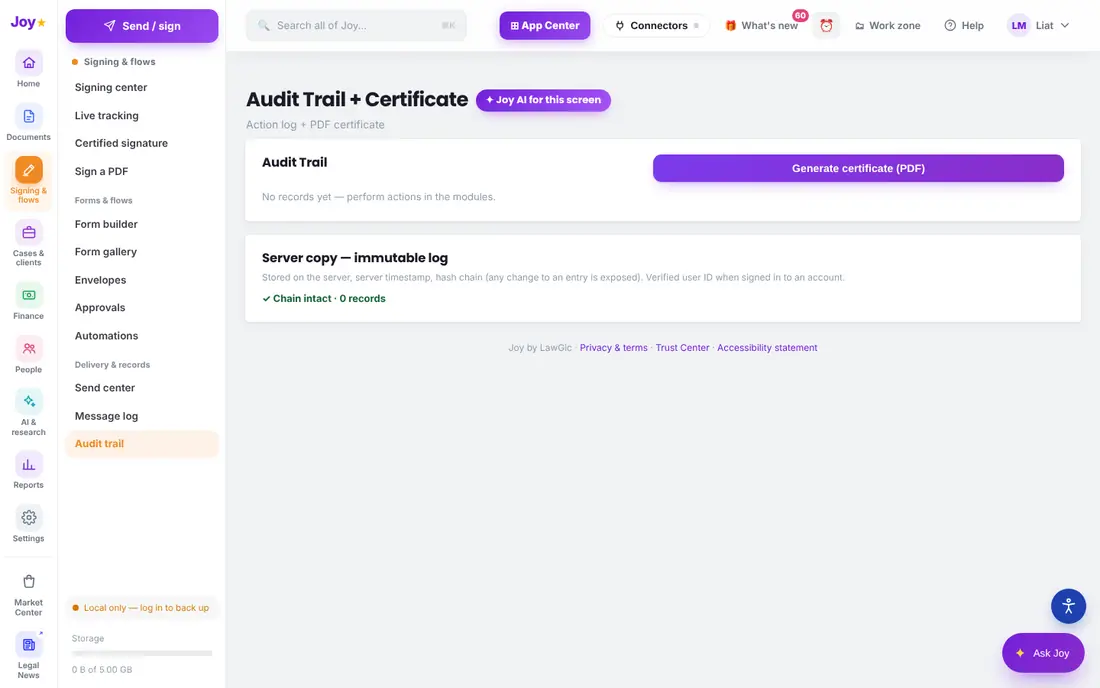
- Who sent, opened and signed — and when
- Proof that the document did not change after signing
- A completion certificate summing up the whole process
How to do it in Joy
In Joy define the signers and the order, each signer gets a personal link, every signature is sealed cryptographically (ECDSA P-256), and the audit trail records every action. The API and webhooks connect the process to the organisation’s systems.
This page is general information, not legal advice. Every rule is given with its official source; anything marked "to verify" must be checked against the current wording. Last updated: 15 October 2026.