Three levels of signature
The Electronic Signature Law, 2001 distinguishes between an electronic signature, a secure electronic signature (identifies the signer and reveals any change to the document) and a certified electronic signature (secure, with a certificate from a registered certification authority).
What to check before remote signing
- Whether the document requires a special form — notarisation, signing before a lawyer or a registering body’s own form.
- How the signer is identified — a personal link for each, and a record of where it was sent.
- In what order people sign — for example the seller before the buyer.
- What is kept — an audit trail and a completion certificate.
How to do it in Joy
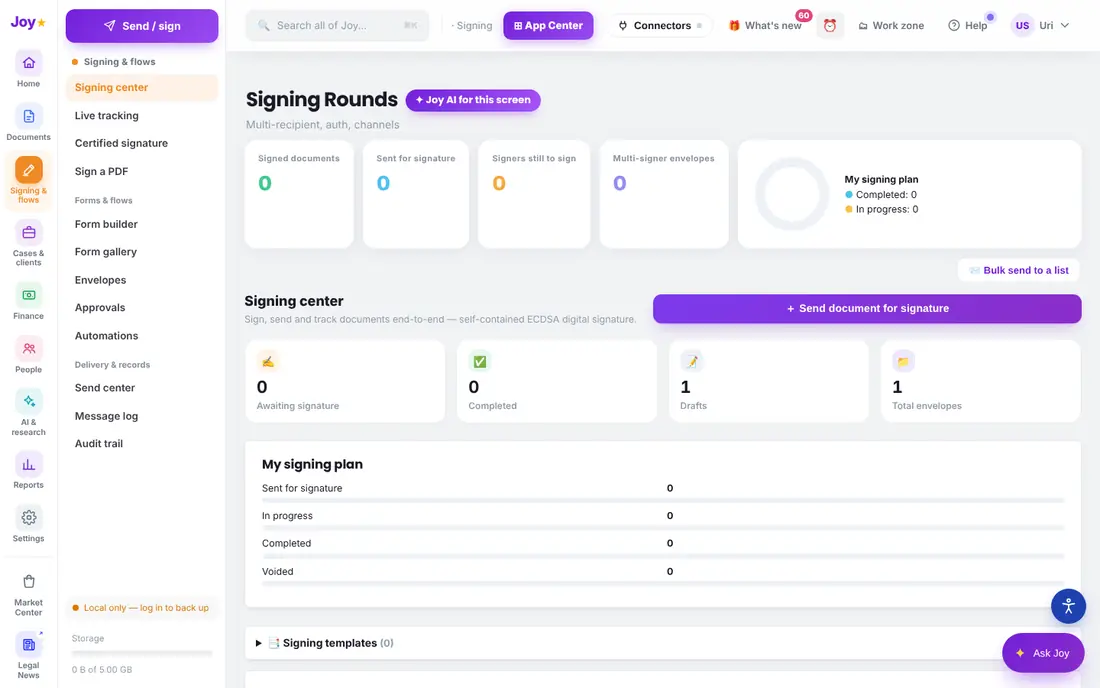
Create a signing round from the deal’s file, add the buyers, sellers and attorneys-in-fact, and set the order. Each signer gets a personal link and signs from a phone, and you see who opened and who signed. At the end — a locked document with verified signatures and a completion certificate.
This page is general information, not legal advice. Every rule is given with its official source; anything marked "to verify" must be checked against the current wording. Last updated: 15 October 2026.