A sale is a sequence of documents, and some depend on earlier ones. Holding the list from the start saves delays at registration.
Before signing
- A current land-registry extract or a rights certificate from the registering body
- Checks for liens, notes and attachments
- The parties’ details and ID documents, and know-your-client
- Statements of debts to the local authority and the building committee
Signing
An undertaking to make a real-estate transaction requires a written document (Land Law, 1969, section 8). The sale agreement is signed by all parties, with the powers of attorney and related forms the deal needs.
After signing
- Registering a caution note in the buyer’s favour
- Reporting to the Tax Authority (property taxation) within the statutory period
- Tax clearances and the local-authority certificate for registration
- Registering ownership in the buyer’s name
How to do it in Joy
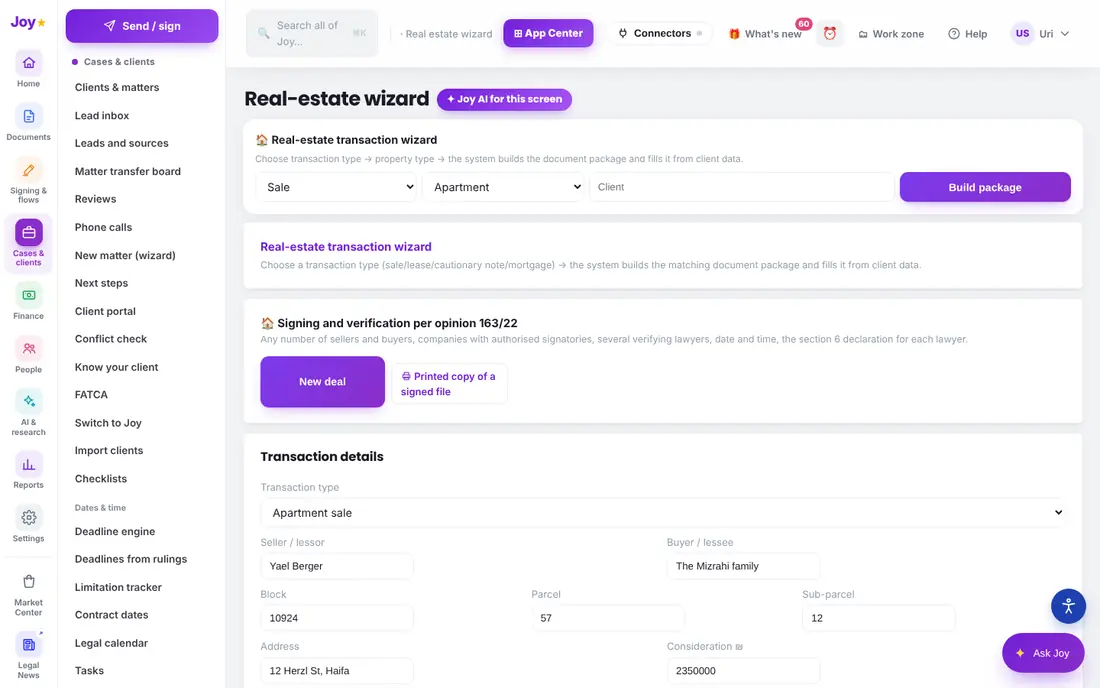
In Joy’s real-estate wizard enter the deal — parties, block, parcel, address and price — and get the deal’s document package, an organised folder and the dates in the calendar. Every party signs remotely, and everything is kept in the deal’s file.
This page is general information, not legal advice. Every rule is given with its official source; anything marked "to verify" must be checked against the current wording. Last updated: 15 October 2026.